A hospital’s code-team certification requirements are, at minimum, consistent inside that building. An outpatient clinic doesn’t get that consistency handed to it. There’s no single federal law and no uniform state statute that tells a physician’s office, a pediatric practice, or an urgent care center which of BLS, ACLS, or PALS its staff needs to carry. What actually sets the requirement is a patchwork: specialty-society guidance, state sedation regulations tied to the specific procedures performed, payer and malpractice credentialing, and — for freestanding surgical facilities — accreditation standards.
That patchwork isn’t a loophole. It’s the reason two outpatient practices two miles apart can have entirely different, entirely correct, certification standards.
Why “Outpatient” Isn’t One Requirement
A general adult primary care office running routine visits, vaccinations, and chronic disease management sits at the low end of that patchwork. BLS for clinical staff is the near-universal expectation — driven less by statute than by payer credentialing, malpractice carrier requirements, and basic standard of care — but nothing routinely pushes a practice like this toward ACLS or PALS.
A pediatric practice changes the calculation immediately, because the American Academy of Pediatrics has a standing policy statement — reaffirmed and updated as recently as 2026 — that sets specific expectations for office-based pediatric emergency readiness: staff trained appropriately to their role, essential emergency equipment and medications stocked and checked on a schedule, and mock emergency drills run regularly. That’s a specialty-society standard, not a state law, but it’s the standard a malpractice carrier or a practice-accreditation reviewer will actually measure a pediatric office against.
Add a procedure with sedation — endoscopy, minor surgery, pain management injections done under moderate sedation — and a third layer activates: state office-based-surgery or sedation regulations, which run on the same tiered logic dentistry does. Texas is a representative example: BLS is required at every sedation level, but Level II and Level III (moderate and deeper sedation) require at least one person on-site holding ACLS or PALS, depending on the patient population. Other states structure the tiers differently, but the shape — BLS as the floor, ACLS or PALS activating once sedation goes past minimal — repeats across jurisdictions.
What Your Practice Actually Needs, by Type
General adult primary care, family medicine, or specialty office with no procedures beyond exams, vaccines, and in-office labs:
BLS for clinical staff is the standing expectation. No sedation and no standing emergency-response role means no default ACLS or PALS requirement.
Pediatric primary care or pediatric urgent care:
BLS for all clinical staff at minimum. AAP guidance calls for additional pediatric-specific emergency training — PALS or an equivalent course — for the clinicians who would actually manage a pediatric emergency in that office, not just the physician on record.
Any office performing procedures under moderate sedation or deeper:
GI/endoscopy suites, office-based plastic surgery, oral and maxillofacial procedures, sedation-based pain management: BLS across all staff, with ACLS required once sedation moves past minimal, and PALS added if the patient population includes children. This is state-regulated and tiered by sedation level, not a blanket rule — confirm the specific tiers with the state medical board before assuming another state’s standard applies.
Urgent care or occupational medicine clinics:
BLS plus ACLS for clinicians is the de facto standard almost everywhere, even without a specific statute requiring it. The patient population is undifferentiated and higher-acuity than a scheduled primary care visit, and payer credentialing and malpractice underwriting both tend to assume ACLS is already in place.
Freestanding ambulatory surgery centers:
Accreditation standards (AAAHC, Joint Commission’s ambulatory program) and most state ASC licensure require ACLS-certified staff present during procedures and recovery, with PALS added for centers treating pediatric patients. This is the one outpatient category where the requirement is closest to a hard accreditation standard rather than a judgment call.
Certify to what the practice actually does and who it actually treats — not to a generic assumption about what an “outpatient office” requires, since that assumption is what this patchwork makes wrong more often than not.
Certification Is Only Half the Standard
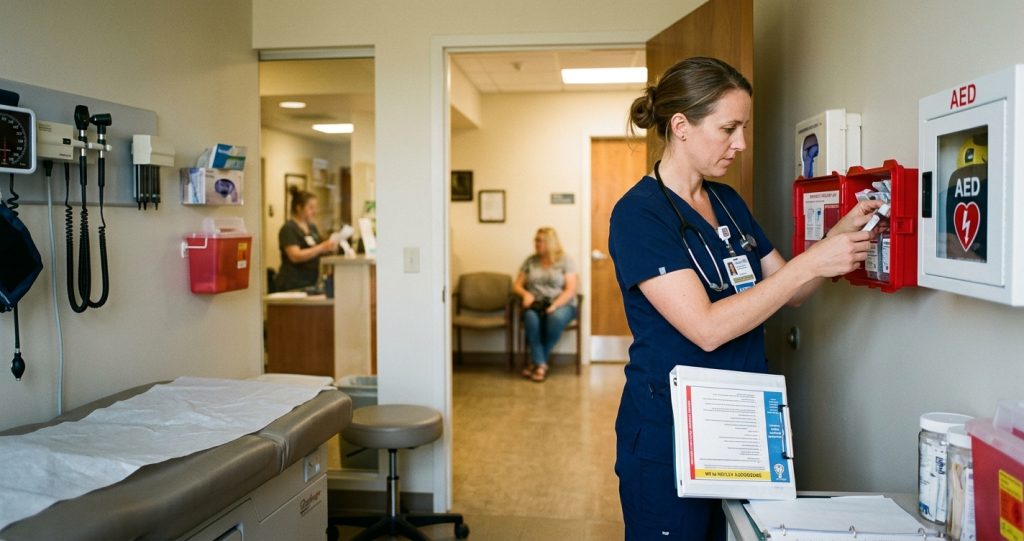
The AAP’s framework for pediatric offices doesn’t stop at who’s certified — it expects the equipment for a pediatric emergency (properly sized airway equipment, vascular access supplies, weight-based emergency medications) to be stocked and checked on a set schedule, and it expects the office to run mock emergency drills regularly rather than treating a certification card as the entire plan. The same logic holds for any outpatient setting managing sedation or higher-acuity walk-ins: a current certification on file and a drilled, equipped office are two different things, and only one of them gets tested when a real emergency happens.
Building a Credentialing File That Matches the Practice
Start with what the practice actually does — routine visits, pediatric care, sedation procedures, undifferentiated urgent care — and match certifications to that reality rather than to a generic “medical office” template. For pediatric practices, confirm which staff need PALS versus BLS based on their actual role in an emergency, per AAP guidance, not seniority. For any practice performing sedation, confirm the specific tier requirements with the state medical board directly, since the sedation-level thresholds vary by state and change with regulatory updates.
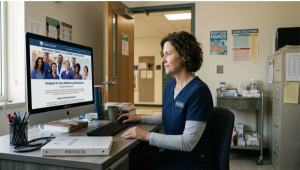
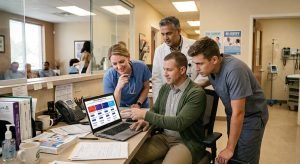
Where a practice needs to certify several staff members at once, align renewal dates into a single cycle instead of tracking them individually, and keep equipment-check and drill documentation alongside the certification file — a payer audit or an accreditation survey will ask for both.
Bottom Line
No single law hands an outpatient practice its BLS, ACLS, or PALS requirement. What the practice treats — routine adult visits, pediatric patients, sedation procedures, undifferentiated urgent care — does. Match the certification to the practice type deliberately, confirm the sedation-level thresholds with the state board where they apply, and back the certification with the equipment and drills that make it more than a card in a file.
Advanced Certification Institute provides 100% online ACLS, PALS, and BLS certification and recertification for healthcare professionals — built to certify an entire outpatient staff on a schedule that doesn’t require closing the office. Check out our group certifications to certify the entire office in one day. Explore our courses.
Use code BLOGREADER for a discount off your next purchase!