Twelve hours. Sometimes thirteen. Sometimes more.
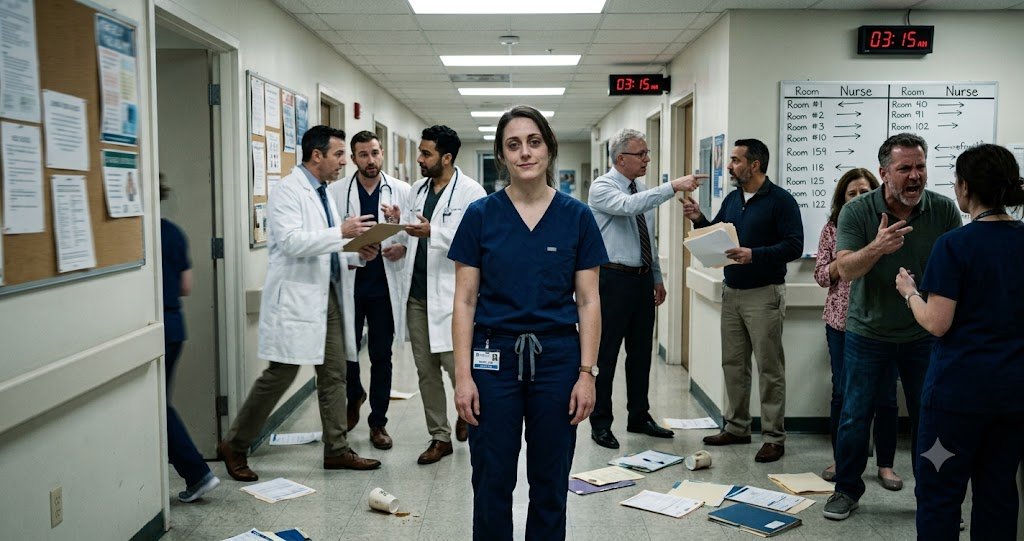
You walked in before sunrise or clocked out well past midnight. You managed six patients, fielded family calls, caught a med error before it reached the bedside, and somewhere in the middle of all of it — you noticed something. A subtle change. A look on a patient’s face. Vitals that were trending in the wrong direction before anyone else had a chance to see it.
You called it. You acted. You may have run a code.
And now you’re supposed to go home and make dinner.
This is the reality of nursing — and the emotional and physiological weight of that transition is real, significant, and chronically underaddressed. If you’ve ever sat in your car in the parking garage for ten minutes before driving home, you already know what we’re talking about.
Nurses Carry What Others Don’t See
Before we talk about decompression, let’s acknowledge what nurses are actually carrying at the end of a shift.
Nurses are the constant. Physicians come and go. Specialists consult and leave. But nurses are the ones at the bedside — hour after hour — watching, assessing, and tracking the full picture of a patient’s condition. That continuity means nurses are almost always the first to detect a change in patient status: the subtle confusion that signals early sepsis, the respiratory rate creeping up before oxygen saturation drops, the restlessness that precedes a decline.
And when the situation escalates, nurses are typically the first to identify a code. They are the ones who initiate the call, start compressions, grab the crash cart, and coordinate the response before the rest of the team even arrives. They run the algorithms they were trained on — ACLS, BLS, PALS — in real time, under pressure, with lives on the line.
That is not a small thing. That is an enormous physiological and psychological event. And doing that once — let alone multiple times across a career — leaves a mark.
Hypervigilance, elevated cortisol, the inability to “turn off” — these aren’t character flaws. They are the natural consequence of a job that demands constant alertness and split-second life-or-death decisions.
Why the Shift-to-Home Transition Is So Hard
Most professions allow for a gradual wind-down. Nursing does not.
One moment you are managing a deteriorating patient, coordinating with physicians, and documenting in real time. Next, you’re expected to merge onto the highway, stop at the grocery store, and ask your kids about their day.
The human nervous system doesn’t switch off that cleanly. After a high-stress shift, your body is still in a state of physiological activation — elevated heart rate, heightened alertness, stress hormones still circulating. This is sometimes called hypervigilance bleed, and it’s one of the primary reasons nurses report difficulty sleeping, disconnecting from family, and feeling emotionally flat even when they’re physically home.
Add to that the moral weight of a difficult shift — a patient who didn’t make it, a family that was struggling, a code that didn’t go the way anyone hoped — and the commute home can feel less like relief and more like a void.
How to Actually Decompress — Strategies That Work
Decompression isn’t about forgetting your shift. It’s about creating a deliberate transition between who you are at work and who you are at home.
Create a physical transition ritual. The act of changing out of your scrubs before leaving the unit or immediately upon arriving home is more powerful than it sounds. It signals to your nervous system that the role is shifting. Some nurses shower as soon as they get home — not just for hygiene, but as a deliberate ritual of closing out the shift. Find whatever physical marker works for you and do it consistently.
Give yourself a commute buffer. If you drive home, resist the urge to immediately call family or replay the shift in your head. Use the commute intentionally — a specific playlist, a podcast with no relation to healthcare, or silence. The commute is your decompression chamber. Use it.
Name what happened — then set it down. Suppressing the events of a hard shift doesn’t make them disappear; it delays their impact. If something significant happened, acknowledge it to yourself. Say it out loud, write it in a journal, or text a colleague who was there. The act of naming it externalizes it. Then, make a conscious decision to set it aside for the evening. You carried it. You don’t have to carry it into every moment at home.
Move your body. Physical activity — even a 20-minute walk — is one of the most evidence-supported ways to regulate the stress response. It metabolizes cortisol and adrenaline, reduces physiological hyperarousal, and helps bridge the gap between a high-alert shift and a restful evening. This doesn’t require a gym. It requires movement.
Protect your sleep aggressively. Sleep deprivation compounds every other stressor. For night shift nurses especially, sleep hygiene is non-negotiable. Blackout curtains, a consistent post-shift sleep window, and a phone that is not next to your bed are minimum standards. Your ability to catch the next critical change in your next patient depends on you being rested.
Set a boundary with shift talk at home. This one is difficult, especially if your partner or family wants to understand your day. It’s reasonable to share briefly — and it can be healthy to do so. But consider setting a time limit. “I’ll talk about work for 15 minutes and then I need to be present here.” You are not abandoning your patients by choosing to be fully at home. You are protecting your ability to show up for them tomorrow.
Seek peer support — and use it. Many hospitals now offer structured peer support programs and employee assistance resources for nurses following traumatic events. Use them. There is nothing weak about acknowledging that running a code on a 40-year-old patient, or losing a patient you’d cared for across multiple shifts, takes a toll. The strongest nurses know when to ask for support.
The Standard You Hold Deserves Protection
You are the safety net. You are the early warning system. You are the first responder within the hospital walls — the one who identifies the code, initiates the call, and holds the situation together until the full team arrives.
That level of vigilance, skill, and presence cannot be sustained without intentional recovery. Decompression is not a luxury. It is a clinical necessity — for your patients, your family, and yourself.
You can’t run the next code on an empty tank. Protect your recovery with the same discipline you bring to your patients. Thank you, to every nurse reading this, we see you, thank you for all you do. You are overworked, and under-appreciated.
Advanced Certification Institute provides 100% online ACLS, PALS, and BLS recertification for nurses and healthcare professionals — built around your schedule. Explore our courses.
Author: Kate Fitzgerald, BSN, RN | Reviewer: ACI Medical Team | Published: July 6, 2026 |