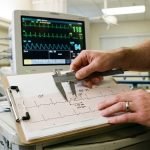
If you work in a hospital, emergency department, intensive care unit, or any clinical setting where cardiac emergencies can occur, you have almost certainly encountered the acronym ACLS. But what exactly is ACLS certification, who needs it, and why does it matter? This guide answers every question healthcare professionals have about ACLS — from what the course covers to how ACI delivers it online with full accreditation and CME credit.
What Does ACLS Stand For?
ACLS stands for Advanced Cardiovascular Life Support. It is an evidence-based, clinical intervention protocol developed to manage cardiovascular emergencies, including cardiac arrest, stroke, acute coronary syndromes (ACS), and life-threatening arrhythmias. ACLS goes well beyond basic CPR — it is the advanced tier of emergency response that healthcare teams rely on when a patient’s life is in immediate danger.
What Is ACLS Certification?
ACLS certification is the formal credentialing process that validates a healthcare professional’s knowledge of and competency in Advanced Cardiovascular Life Support protocols. Certified providers demonstrate that they understand the full range of ACLS algorithms, recognize and treat cardiac and respiratory emergencies, and can function effectively as part of a resuscitation team.
In the United States, ACLS guidelines are published by the American Heart Association (AHA) based on the International Liaison Committee on Resuscitation (ILCOR) evidence review process. The 2020 AHA Guidelines, updated further in 2025, form the current standard. ACI’s curriculum is designed by Board Certified Anesthesia and Critical Care Physicians to reflect these most current guidelines in every course.
Who Needs ACLS Certification?
ACLS is required — and expected — across a wide range of clinical roles and settings. If your scope of practice includes caring for critically ill or emergency patients, ACLS certification is almost certainly a professional requirement. Healthcare professionals who commonly hold ACLS certification include:
- Registered Nurses (RNs) and Advanced Practice Nurses (APNs, NPs, CRNAs)
- Emergency Medicine and Critical Care Physicians
- Physician Assistants (PAs) and Nurse Practitioners (NPs)
- Paramedics and Advanced Emergency Medical Technicians
- Anesthesiologists and Anesthesiology Residents
- Respiratory Therapists working in ICU and emergency settings
- Hospitalists, Internal Medicine, and Cardiovascular Specialists
- Surgical and Peri-operative Nurses
Employers including hospitals, surgery centers, urgent care clinics, and transport services routinely require valid ACLS certification as a condition of hire or continued employment. Many state licensing bodies and hospital credentialing committees also mandate it.
What Does ACLS Certification Cover?
A comprehensive ACLS course covers the clinical knowledge and decision-making skills needed to manage life-threatening emergencies. ACI’s physician-designed curriculum addresses all of the following:
Core ACLS Algorithms
- Adult Cardiac Arrest Algorithm (Shockable and Non-Shockable Rhythms)
- Adult Bradycardia with a Pulse Algorithm
- Adult Tachycardia with a Pulse Algorithm
- Acute Coronary Syndromes (ACS) Algorithm
- Immediate Post-Cardiac Arrest Care Algorithm
- Adult Stroke Algorithm
- Opioid-Associated Emergency Algorithm
Cardiac Rhythm Recognition
Healthcare professionals must be able to rapidly identify arrhythmias on a cardiac monitor. ACLS training covers recognition and management of:
- Ventricular fibrillation (VF) and pulseless ventricular tachycardia (pVT)
- Asystole and pulseless electrical activity (PEA)
- Symptomatic bradycardia and heart blocks
- Stable and unstable tachycardias, including SVT, atrial fibrillation, and wide-complex tachycardia
Pharmacology
ACLS providers must know the indications, dosing, and administration of resuscitation medications, including epinephrine, amiodarone, lidocaine, atropine, adenosine, magnesium sulfate, and thrombolytics in the context of stroke and pulmonary embolism.
Airway Management
Effective airway management is critical in cardiac arrest and respiratory emergencies. ACLS covers bag-mask ventilation technique, advanced airway placement considerations, and waveform capnography for confirming and monitoring ventilation.
Team Dynamics and Communication
ACLS emphasizes high-performance team dynamics, including defined team roles, closed-loop communication, and the responsibilities of both team leaders and team members during a resuscitation. Effective teamwork is as important as clinical knowledge in achieving the best patient outcomes.
How Long Is ACLS Certification Valid?
ACLS certification is valid for two years from the date of completion. At the two-year mark, recertification is required to maintain your credentials. Recertification through ACI assumes foundational knowledge and moves at an accelerated pace, allowing busy clinicians to efficiently re-validate their skills without repeating introductory material.
It is critical not to let your ACLS certification lapse. Many hospitals and clinical facilities will remove providers from the schedule if their certification is expired, and re-credentialing can take weeks in a busy HR department.
Can You Get ACLS Certification Online?
Yes — and for the vast majority of healthcare professionals, an online ACLS course is the most practical and efficient path to certification. ACI’s 100% online ACLS course eliminates the need to travel to a skills lab, take time off during a workday, or schedule around a fixed class date. You complete the course on your own schedule, at your own pace.
ACI’s online ACLS course does not require an in-person skills test. Upon successfully passing the final exam, your digital provider card is issued instantly. If your employer or institution has specific requirements beyond digital issuance, ACI also provides printed cards and certificates.
Is Online ACLS Certification Accepted?
ACI’s ACLS certification is accredited by five major professional bodies — more than any other online provider:
- AMA (ACCME) — for physicians and medical professionals
- ANCC — for registered nurses and advanced practice nurses
- AAPA — for physician assistants
- ACPE — for pharmacists
- ADA — for dental professionals
This multi-accreditation coverage means ACI’s certification is accepted across virtually every clinical profession that requires ACLS credentials. Tens of thousands of providers credentialed through ACI work at institutions including Mayo Clinic Health System, New York-Presbyterian, St. Jude Children’s Research Hospital, Team Health, and Mednax.
Does ACLS Certification Include CME Credits?
Yes. Every ACI ACLS course includes Continuing Medical Education (CME) and Continuing Education Unit (CEU) credits at no additional charge. This is a significant advantage over many competing providers who either do not offer CME or charge separately for it. For physicians, nurses, PAs, and pharmacists who need to track annual CME hours, combining certification and credit in a single course is both efficient and cost-effective.
How Much Does ACLS Certification Cost at ACI?
ACI offers some of the most competitive pricing in the online certification market:
- New ACLS Certification: $159
- ACLS Recertification: $119
There are no hidden fees. Your digital provider card, CME/CEU credits, and access to the full course content are all included in the published price.
Why Choose ACI for ACLS Certification?
Not all ACLS courses are created equal. ACI’s curriculum is built and reviewed by Board Certified Anesthesia and Critical Care Physicians — the specialists most directly involved in managing cardiac emergencies every day. This clinical foundation produces course content that is not only accurate to current guidelines but reflects real-world resuscitation practice.
ACI also employs an adaptive testing system that links incorrect answers directly back to the relevant study material, ensuring that gaps in knowledge are identified and addressed before certification is issued. This approach raises the standard of what an ACLS certification actually represents — and gives providers greater confidence when they step into a resuscitation.
| Ready to get ACLS certified? Start your course today at aciacls.com — instant digital provider card, full CME/CEU credits included, and the lowest prices online. |